Open policies#
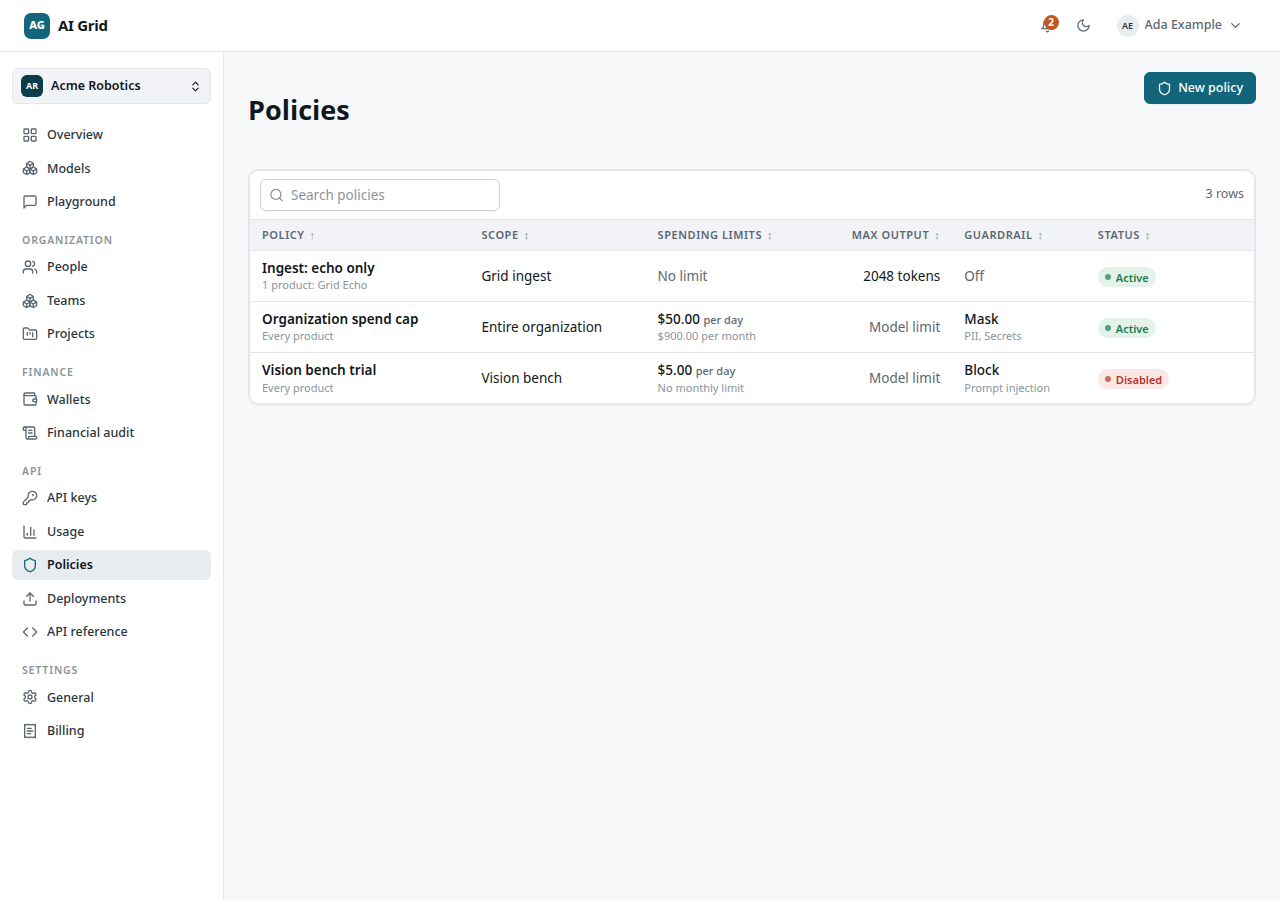
Open Policies under the API group in the left rail. The table shows:
| Column | Meaning |
|---|---|
| Policy | Name |
| Scope | Entire organization or one project |
| Spending limits | Daily / monthly USD ceilings |
| Max output | Output token cap |
| Guardrail | Off / Observe / Mask / Block plus rule packs |
| Status | Enabled or disabled |
Row menu: Edit, Disable (or Enable), and Delete with an optional reason.
Create a policy#
Click New policy and fill the drawer:
- Name — something you recognize in audit later.
- Scope — Entire organization or a single project. Personal workspaces hide project setup.
- Allowed products — an optional allowlist. When several active policies name allowlists, the lists intersect: a call must be in every list to pass.
- Daily limit / Monthly limit — USD ceilings on charged spend. Outstanding (still-held) reservations count toward the ceiling even across UTC day/month boundaries.
- Max output tokens — hard cap on reply length.
- Content guardrail mode + Rule packs (up to 3):
- Off — no screening.
- Observe — matches are counted and audited, nothing changed.
- Mask — matched content is masked before dispatch.
- Block — a match refuses the call before any reservation.
Click Save. The policy applies to the next call — admission re-evaluates active policies inside the transaction, so a change takes effect immediately, even on requests already in flight elsewhere.
How limits combine#
- All active applicable policies remain in force at once. A policy is a restriction, not a wallet or an authority grant: it can only narrow what callers may do, never add access.
- A call must fit every applicable ceiling: daily/monthly spend, max output, and the intersected allowlists.
- Guardrail packs screen user-submitted text with pattern heuristics (PII, secrets, injection). A blocked call is refused before any money moves.
Honest limits#
- Policy ceilings are daily/monthly only; weekly and lifetime ceilings exist for API keys but not as named policies.
- Guardrails apply to text you send; they do not inspect provider replies.
- Disabling or deleting a policy is itself audited with the reason you give.
For the money side these restrictions protect, see Wallets and financial audit.